Sacred Geometry
Ratios in the Cosmos
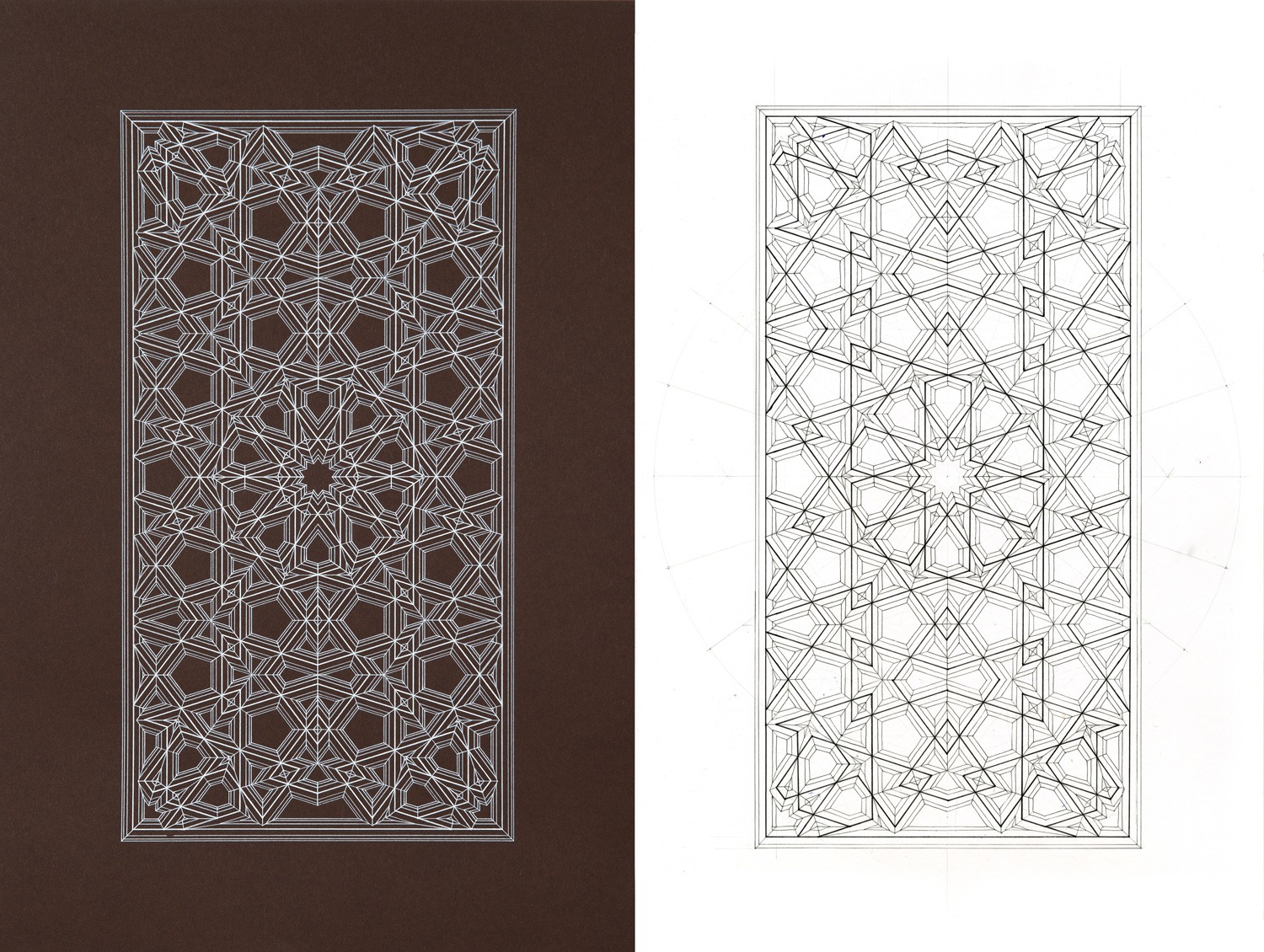
The study and creative exploration of Islamic geometric design, taught at the sites where it is most fully realised. Days of patient construction with compass and rule alternate with visits to the great pattern-bearing monuments, where the work of the hand meets the work of centuries.
In the Islamic tradition, geometry is itself a form of theology. Where representational images were set aside, ratio became the language in which the divine could be praised. The square, the circle, the regular polygon, and the proportions that pass between them (1 : √2, 1 : φ, 1 : √3) were taken as evidence of an ordered cosmos, and to draw them precisely was itself an act of worship. The Islamic monuments of undivided India bear quiet witness to this: from the carved jaalis of Fatehpur Sikri to the inlaid stars of Humayun's Tomb, from the tile-work of the Wazir Khan Mosque in Lahore to the calculated symmetries of the Taj at Agra. The pattern-maker and the geometer were doing the same work as the calligrapher and the muezzin: arranging the visible world into the proportions that belong to the One.